
- News
- City News
- puducherry News
- Government considering monetary compensation for Kaliamman Koil street residents
Trending
This story is from May 22, 2018
Government considering monetary compensation for Kaliamman Koil street residents
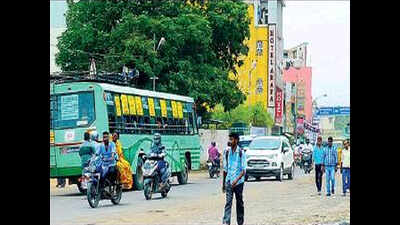
The corporation is reviewing its decision to offer transferable development rights to residents of Kaliamman Koil Street and may compensate them monetarily instead.
The development comes in light of affected residents sending a representation via the newly formed Kaliamman Koil Street Residents Welfare Association (KKSRWA) to the government, asking to be compensated monetarily.

As many as 251 owners had been identified and intimated by the corporation to part with land measuring 29,224.44 sq.m in order to take up the widening work. As compensation for the ceded land, the corporation had proposed to issue TDR in the owner's name, which is a development rights certificate that allows the land owner to re-develop his/her affected property to an area equal to what was ceded. The owner could also make up for the losses by selling the TDR for a sum to real estate developers.
"The government has positively taken note of the residents' demand. The option of monetary compensation is being reviewed. Property owners who had built their homes and buildings prior to 2008 would be considered eligible," said a senior corporation official.
Greater Chennai Corporation's Rs 150 crore widening proposal for Kaliamman Koil Street, a key stretch that connects Koyambedu with Arcot Road, involves widening the bus route road from Koyambedu till Chinmaya Nagar bus stand to 27.4m (90 feet) and from Chinmaya Nagar bus stand till Arcot Road to 24.4m (80 feet). The road's current width is between six and nine metres.
In October 2017, the corporation had issued notices to property owners asking them to issue as gift deeds the land parcel identified for acquisition to the civic body. "We are not against
road widening but the compensation is unreasonable. What will I do with a TDR? It gives me the right to construct a portion equal to the area I would lose but would it cover construction costs?" said E S P Sivagiri, treasurer, KKSRWA.
Corporation officials batted for TDR. "At present, there are legal troubles (with TDR) which the housing board will settle in the future. But TDR is the way ahead. Developed cities around the world have adopted this format of compensation," said a corporation official.
Residents welcomed the initiative to review the compensation. "Had they not reviewed, we would have had no other choice but approach the courts," said B V Ramanan, the association’s secretary.
End of Article
FOLLOW US ON SOCIAL MEDIA










Photostories

Hot Picks
TOP TRENDING
Popular Categories
Hot on the Web
Top Trends
Baba Siddique NewsRussell WilsonsBaba Siddique DeathSanju SamsonWho was Baba SiddiqueMayank YadavIndia Team Qualifying ScenarioWhere to Watch India vs Australia MatchMahadev Betting AppAmazon LayoffsToday IND vs AUS MatchSuryakumar YadavManagement Colleges of IndiaTop Medical Colleges of IndiaTop Engineering Colleges of IndiaTop Pharmacy Colleges of IndiaLive Cricket Score
Trending Topics
Diwali WishesDussehra 2024 QuotesDussehra WishesVettaiyan OTT ReleaseVettaiyan CollectionVettaiyan ReviewNatasa StankovicDevara CollectionBigg Boss 18Deepika PadukoneShraddha KapoorRatan Tata Passed AwayJigra Movie ReviewVettaiyan Movie ReviewSwatantrya Veer SavarkarDussehra 2024Star Health Hacker DemandedViral MemesUltimate Football Codes October 2024Wordle Answer
Living and entertainment
Latest News
Accused did recce of Baba Siddiqui's house, monitored him for months: Mumbai PoliceParas Mhambrey joins Mumbai Indians as bowling coachSalman Khan’s security beefed up after Baba Siddiqui’s murder; ‘Sultan’ star looked uncomfortable after visiting the late politician’s family at 3 amBaba Siddique may have died prior to hospitalisation, says doctorsReading the Stars and Your Hands: How Astrology and Palmistry Complement Each OtherTaurus, Weekly Horoscope, October 13 to October 19, 2024: Focus on gains and accomplishmentsRoblox dismisses claims made by Hindenburg report: "...don't support their agenda"'Procrastination greatest thief of time': HC junks 'belated case'RSS chief Mohan Bhagwat: Hindus must take lessons from Bangladesh violence2 flee Uttarakhand jail. Did they escape as Ramlila ‘vanars’ looking for Sita?Scorpio, Weekly Horoscope, October 13 to October 19, 2024: Health and self-care are essentialNumerology Predictions Today, October 13, 2024: Read your personalised forecast for numbers 1 to 9Ashton Kutcher and Mila Kunis consider leaving Hollywood amid Sean 'Diddy’ Combs' arrest fallout: ReportVijay celebrates 'GOAT' success as Venkat Prabhu's directorial earns 100 crore share in Tamil NaduLoneliness across generations: Why is it important to address this hidden danger?For 500 years, this village in Madhya Pradesh worships Ravan as ‘Kul Devta’'Little people dressed like dolls': Guest at Sean 'Diddy' Combs' 'freak off' party shares disturbing detailsAlia Bhatt was rejected by Sanjay Leela Bhansali for Amitabh Bachchan and Rani Mukerji starrer 'Black'
Copyright © 2024 Bennett, Coleman & Co. Ltd. All rights reserved. For reprint rights: Times Syndication Service